


Manual Welding by Certified Welders
Precise. Flexible. Reliable.

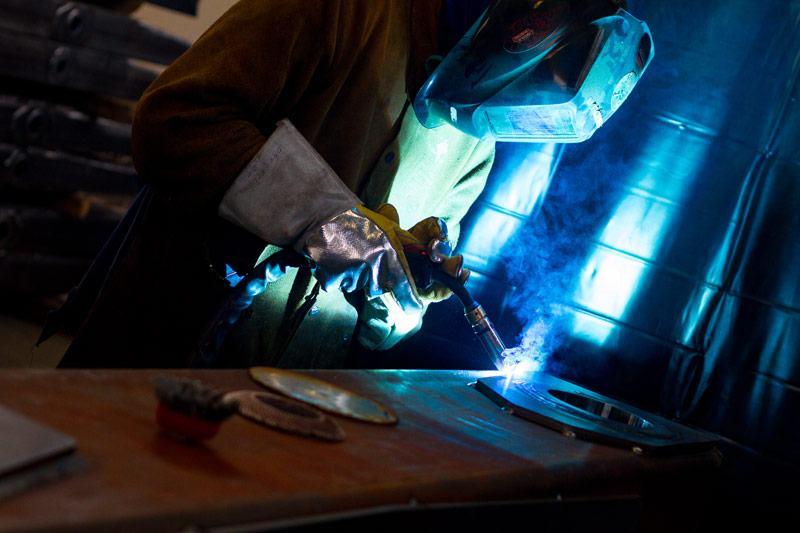
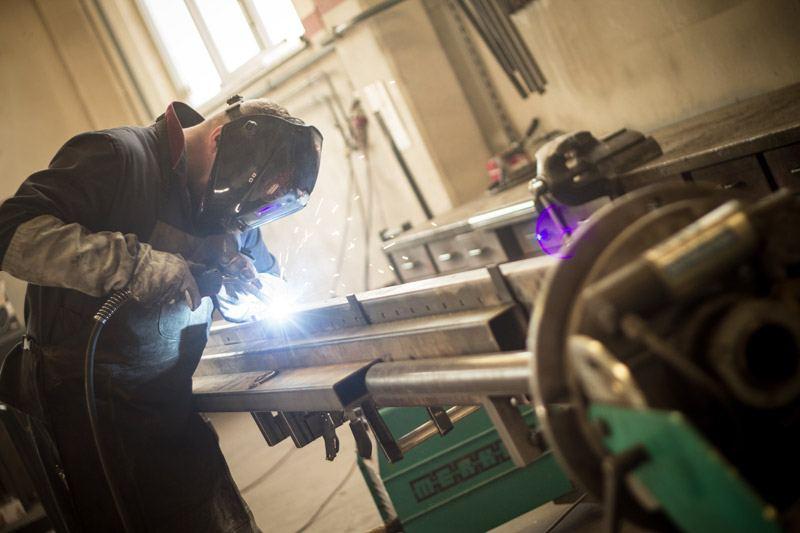
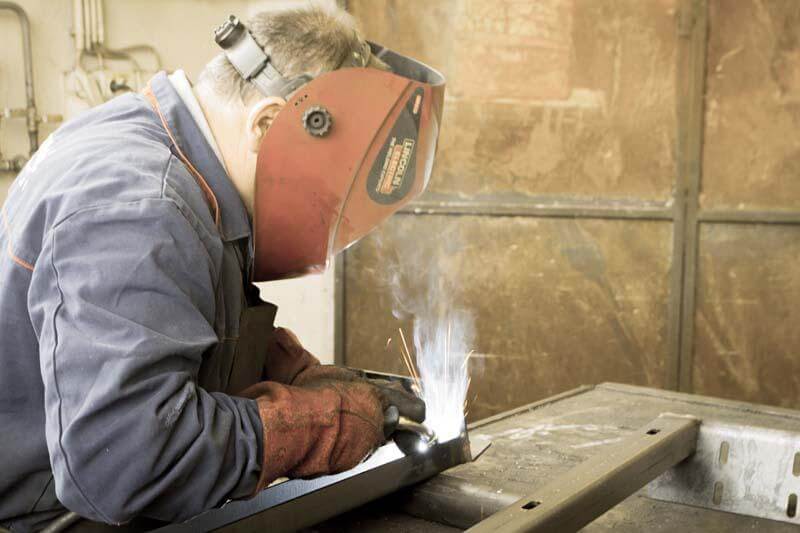
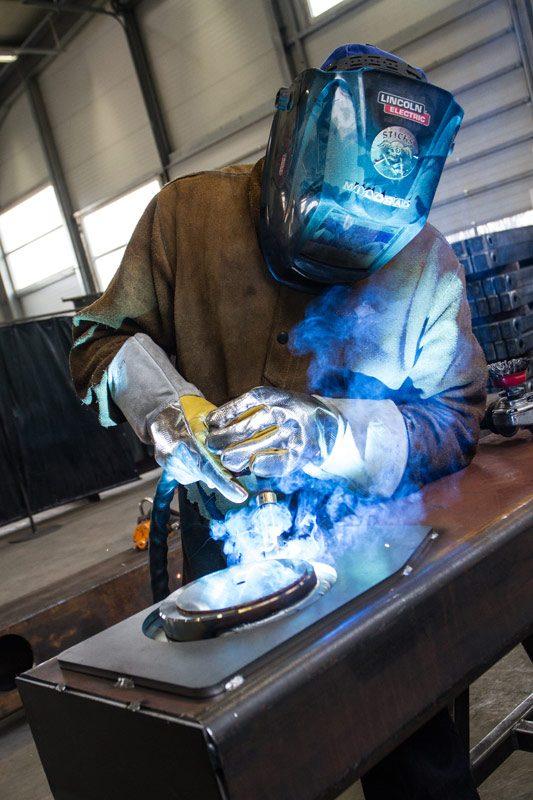
Manual welding is a versatile metal joining process that enables the production of both simple and highly demanding welds on various materials, including structural steel, stainless steel, and aluminum. Due to its flexibility, it is particularly suitable for custom-made products, small batches, prototypes, and on-site assembly work.
In our company, welding is carried out exclusively by highly qualified welders with appropriate certifications, ensuring traceability, repeatability, and compliance with industrial standards. We apply various welding processes, most commonly MAG, MIG, TIG, manual metal arc welding (MMA), and spot welding.
We ensure:
- approved welding procedures (WPQR),
- 25–30 certified welders in accordance with ISO 9606-1,
- welding performed in compliance with EN ISO 3834-2,
- visual inspection (VT) carried out by certified personnel.
Despite the advancement of automation and robotic welding, manual welding remains an essential solution wherever unique adaptations, precision, and professional experience are required.
Insights into Manual Welding
Video Gallery
Manual Welding Using The MIG/MAG Method
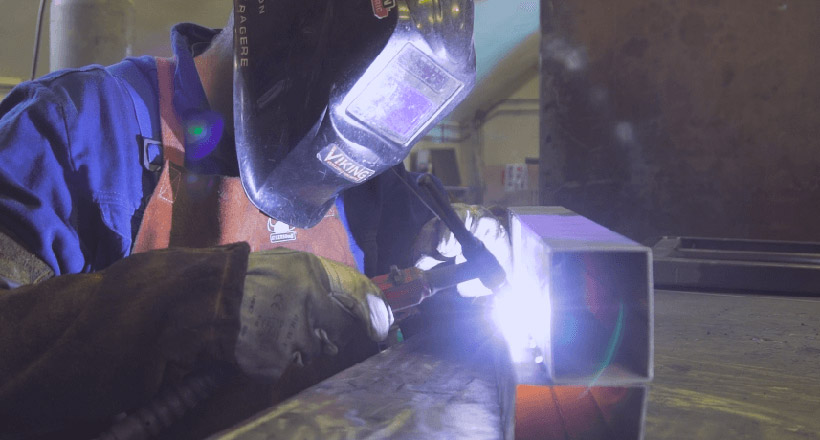
MIG and MAG welding are widely used in industrial production, particularly in the manufacturing of steel structures and metal components. The process ensures high productivity, a stable arc, and high-quality welds in steel and aluminum.
Manual Welding Using The TIG Method
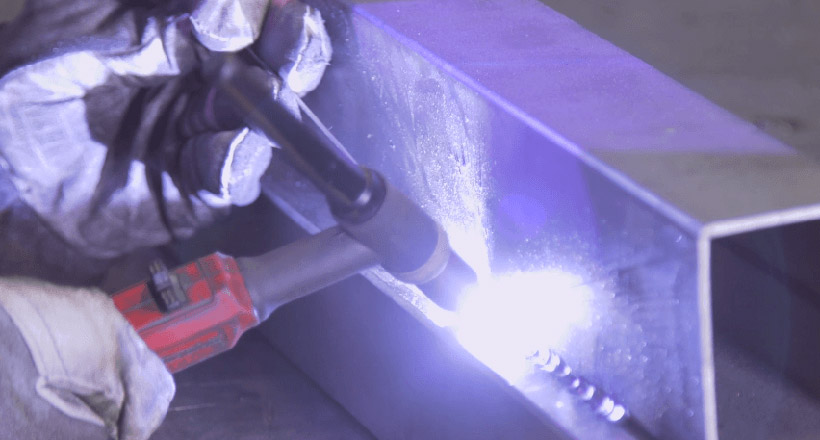
TIG welding is an arc welding process using a non-consumable tungsten electrode in an inert gas environment. It enables precise and aesthetically refined welds, making it particularly suitable for stainless steel, thin materials, and demanding joints.
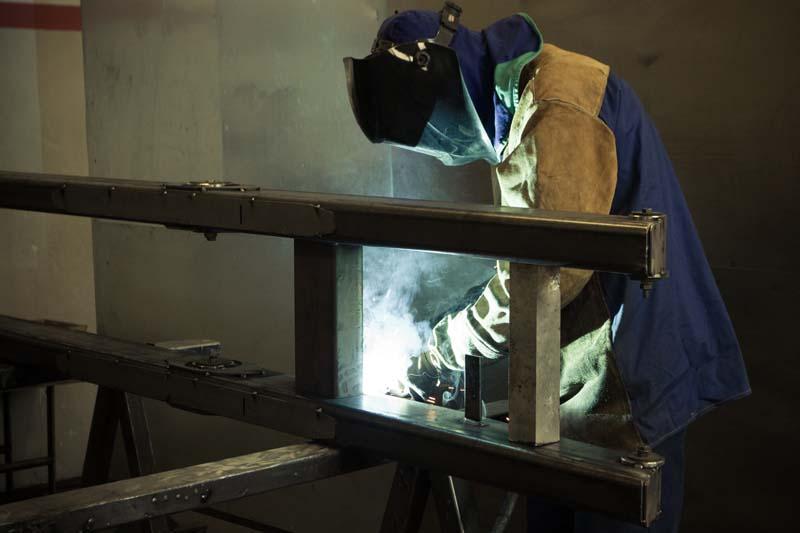
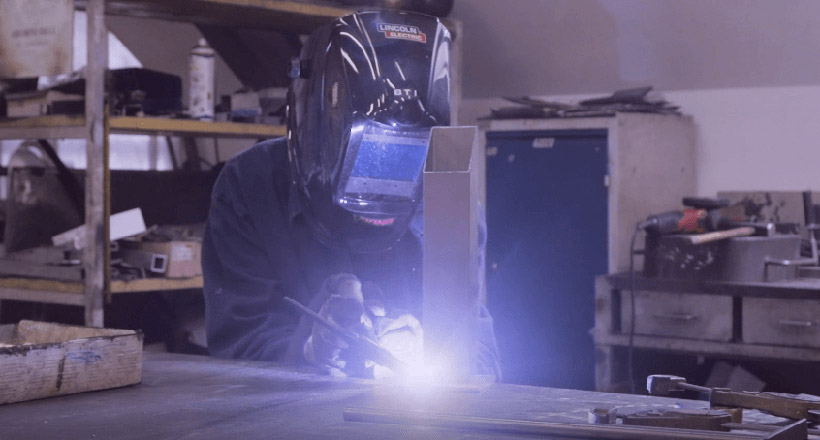
Image Gallery





Frequently Asked Questions
-
Is Repeatability Achievable In Manual Welding?With certified welders, approved welding procedures (WPQR), and proper quality control, stable and repeatable results can be achieved. Although the process is more dependent on the welder’s experience than robotic welding, it ensures reliable weld quality when performed under controlled conditions.
-
Which Materials Do You Weld?We perform welding of structural steel, stainless steel, and aluminum. Depending on the material type and thickness, we select the appropriate welding process (MIG, MAG, TIG, or manual metal arc welding – MMA).
-
Do You Provide On-Site Welding?Manual welding is carried out both in our production facilities and on-site, particularly during the assembly of metal structures, pipeline systems, and for repairs or refurbishment of existing metal components.
-
What Is The Difference Between MIG And MAG Welding?The main difference lies in the shielding gas. MIG welding uses an inert gas (such as argon or helium) and is primarily suitable for welding aluminum and other non-ferrous metals. MAG welding uses an active shielding gas and is more commonly applied when welding structural steel.
-
What Is The Difference Between Manual And Robotic Welding?Robotic welding is mainly suitable for large production series and repetitive components where welding parameters remain constant. Manual welding allows greater flexibility and real-time adjustment of the process based on product geometry, joint accessibility, or modifications during fabrication. The selection of the welding method depends on technical requirements, production volume, and cost efficiency.
-
Do You Have Approved Welding Procedures?We operate with approved welding procedures (WPQR). Welding is performed by certified welders in accordance with ISO 9606-1, and all work is carried out in compliance with EN ISO 3834-2 requirements.
-
When Is Manual Welding Most Suitable?Manual welding is particularly suitable for custom-made structures, small production batches, prototypes, and projects requiring adjustments during the welding process. It is often the only feasible solution for on-site assembly or when working in difficult-to-access locations.
-
Is Manual Welding Suitable For Load-Bearing Structures?When performed using approved welding procedures (WPQR), certified welders, and proper quality control, manual welding is suitable for load-bearing elements and structural joints. The welding process is selected based on the material, expected loads, and specific technical requirements of the project.
Manual Welding In Industry
Manual welding is performed for a wide range of industrial sectors where flexibility, precision, and weld reliability are essential. The process enables the execution of structural, assembly, and repair work on various materials and thicknesses.
We most frequently operate in the following fields:
- mechanical engineering,
- manufacturing of steel structures,
- assembly of metal constructions,
- pipeline systems,
- repair and refurbishment of existing components,
- small-batch production and prototype manufacturing.
Manual welding allows adjustment of welding parameters according to the material type, product geometry, joint accessibility, and expected mechanical loads of the final component.
Welding is carried out:
- in our own production facilities,
- on-site during structural assembly,
- at the client's premises.
Manual Welding Processes
Depending on the material type, thickness, intended application, and project requirements, we select the appropriate manual welding process. The correct selection directly influences weld quality, mechanical properties of the joint, and overall cost efficiency.
MIG Welding
MIG welding (Metal Inert Gas) is primarily used for welding aluminum and other non-ferrous metals. The process is performed under inert shielding gas protection, such as argon or helium, which ensures a stable arc and protects the molten pool from oxidation.
It is particularly suitable for:
- aluminum structures,
- lightweight metal components,
- applications requiring controlled heat input and material melting.
MAG Welding
MAG welding (Metal Active Gas) is one of the most commonly used processes for welding structural steel. The method is characterized by high productivity, good penetration, and reliable weld quality.
It is suitable for:
- load-bearing steel structures,
- industrial components,
- thicker materials.
The process enables efficient welding even in applications exposed to higher structural loads.
TIG Welding
TIG welding (arc welding with a non-consumable tungsten electrode in an inert gas shield) enables highly precise and aesthetically refined welds.
It is most commonly used for:
- stainless steel,
- thin materials,
- visible and demanding joints,
- components where weld surface quality is important.
The process provides excellent control over heat input and weld pool behavior, making it suitable for technically demanding applications.
Manual Metal Arc Welding (MMA)
Manual metal arc welding (MMA), also known as stick welding, is a robust and adaptable process suitable for on-site work and demanding conditions. It does not require additional shielding gas, which makes it especially appropriate for outdoor installations.
It is primarily used for:
- assembly work,
- repairs and refurbishments,
- outdoor welding,
- pipelines and steel structures.
Modern inverter-based equipment ensures a stable arc and reliable performance even under challenging working conditions.