


Robotic Welding
Fast. Repeatable. Precise.

Robotic welding is an automated metal joining process designed for serial production and repetitive products where stable parameters, high productivity and consistent weld quality are essential.
It is suitable for medium and larger series, structural elements and components that require high process repeatability.
By using modern robotic welding cells, we ensure:
- stable and repeatable weld quality,
- optimized production times,
- reduced risk of errors,
- traceability of the production process,
- parameter adjustment according to material and project requirements,
- competitive delivery times.
Robotic welding is particularly suitable for products with a higher number of welds and for projects that require high productivity, repeatability and cost optimization.
Robotic Welding Cells
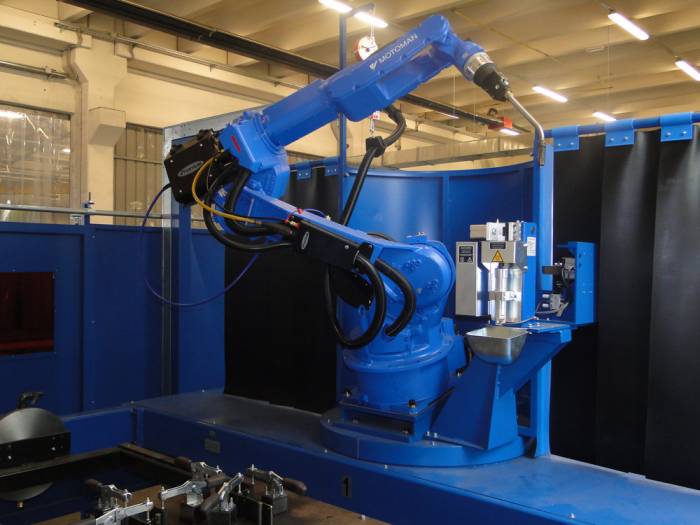
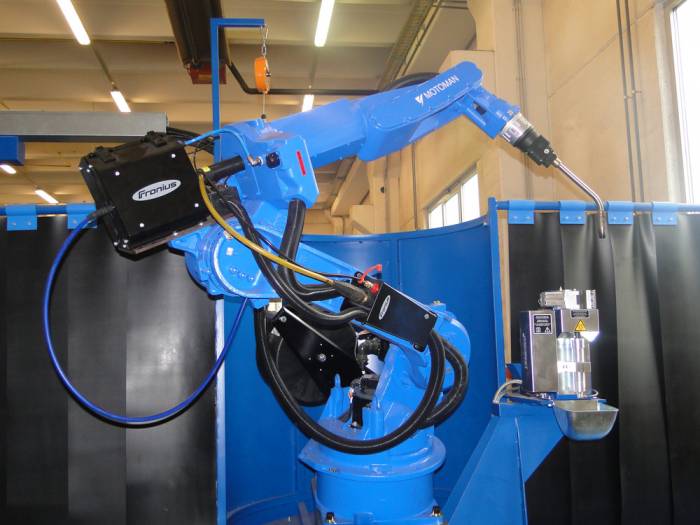
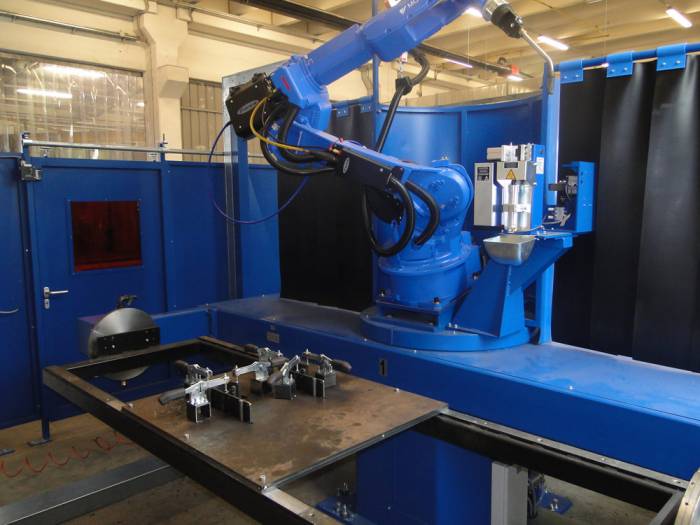
For robotic welding, we use two modern welding cells: Motoman AR2010 and Motoman EA1900N, adapted to different workpiece sizes and serial production requirements. Both cells enable programmed control of the welding process and precise positioning of workpieces.
Robotic Cell: Motoman AR2010
The robotic welding cell is equipped with:
- Motoman AR2010 welding robot,
- YRC1000 robot controller,
- FB-500 floor-mounted travel unit,
- two sequential workstations,
- WG-3000 rotary positioner.
The Motoman AR2010 welding cell enables processing of parts up to 2.5 t in weight and dimensions up to 6500 × 1500 mm. It is suitable for welding larger structural elements and serial production of heavier welded assemblies.
Robotic Cell: Motoman EA1900N
The robotic welding cell includes:
- Motoman EA1900N industrial robot,
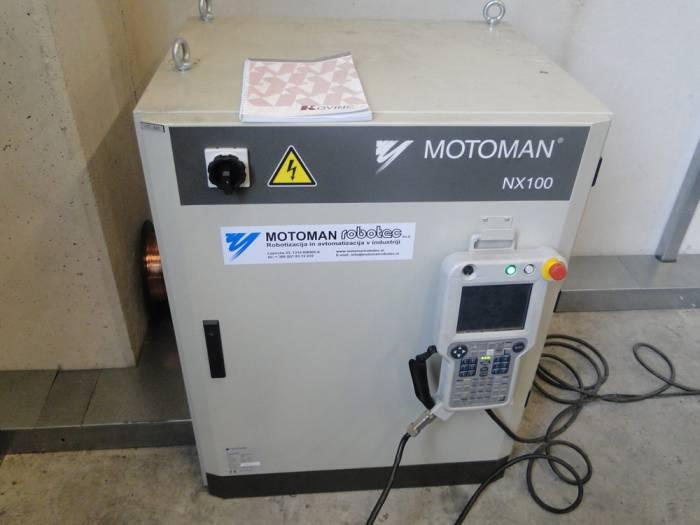
- Motoman NX100 controller,
- RM2-3E rotary positioner around the horizontal axis,
- three external robot axes.
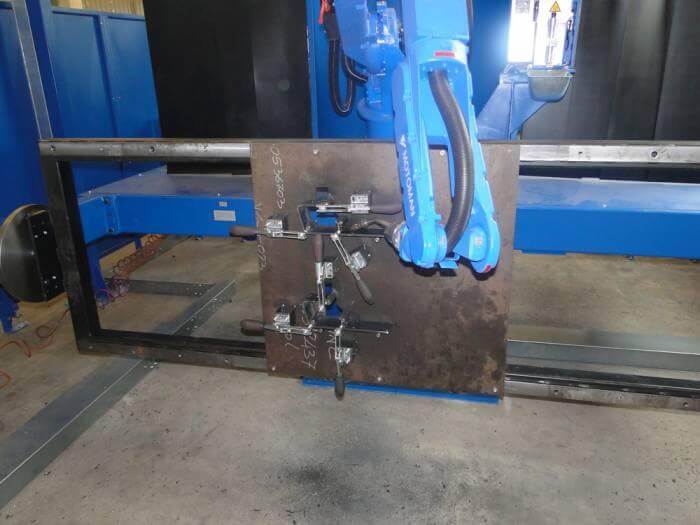
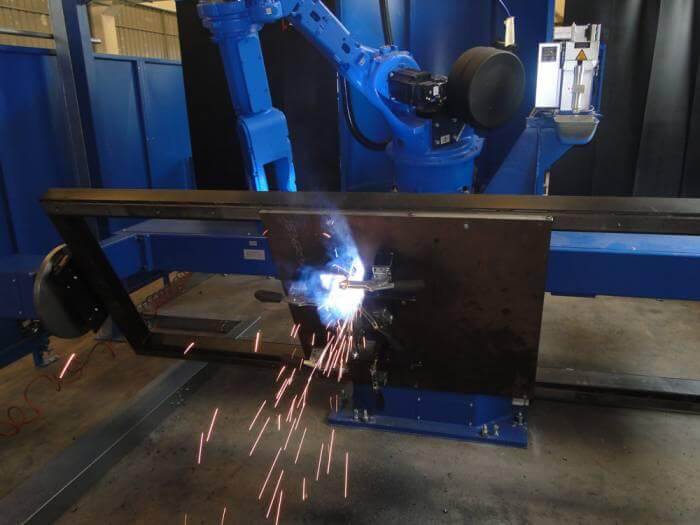
The Motoman EA1900N welding cell enables processing of parts up to 500 kg in weight and dimensions up to 1400 × 2500 mm. It is suitable for medium-sized series and more complex geometries with a higher number of welds.
Advantages of Robotic Welding
Robotic welding provides technological and production advantages that ensure a stable process and consistent weld quality in serial production:
- high precision and weld repeatability,
- reduced production time and optimized workflow,
- programmed and precise weld path tracking,
- stable movement with vibration control,
- collision detection and system protection,
- automatic calibration for consistent quality,
- remote monitoring and diagnostics,
- integration into existing production systems,
- multitasking capability and adaptability to different products.
The new robotic cell (Yaskawa Motoman AR2010) is co-financed by the European Agricultural Fund for Rural Development within the investment “Development of Metal Activities Kovinc d.o.o.” under the 1st public call for Sub-measure 6.4 Support for Investments in the Establishment and Development of Non-Agricultural Activities.

https://agriculture.ec.europa.eu/common-agricultural-policy/rural-development_en
PRP 2014–2020: https://skp.si/
Insights into Robotic Welding
Video Gallery
Robotic Welding Process
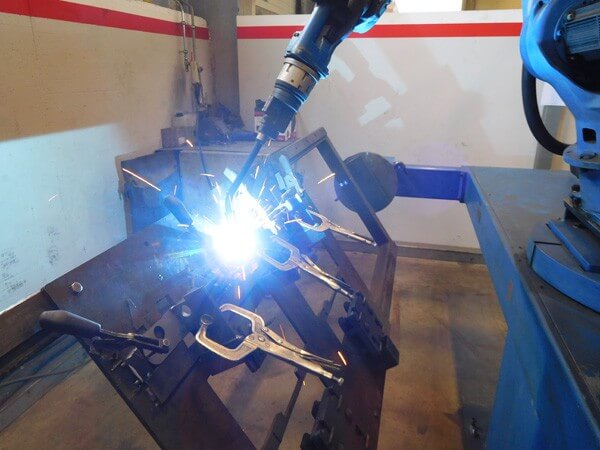
Demonstration of programmed robotic welding in serial production. Precise weld path tracking, a stable welding process and coordinated operation of the robot and positioner are shown.
Operation of the Motoman EA1900N Robot
Demonstration of welding with the Motoman EA1900N robot and NX100 controller. The system enables precise torch control and stable weld execution on more complex geometries.
Image Gallery







Frequently Asked Questions
-
Which robotic welding equipment do you use?We use two industrial robotic welding cells: the Motoman AR2010 with the YRC1000 controller and the Motoman EA1900N with the NX100 controller. Both cells are equipped with positioners and additional axes, enabling precise control of the welding process and adaptation to different workpiece sizes.
-
What is the difference in speed between robotic and manual welding?In serial production, robotic welding is significantly faster than manual welding as it enables constant parameters, continuous operation and optimized robot movement. In addition to shorter welding times, the need for post-processing is also reduced.
-
What is the minimum batch size for robotic welding?The minimum batch size is not defined by a fixed number but depends on product complexity, number of welds and programming time. For simpler products, even a smaller series may be feasible, while for more complex projects the programming effort is economically justified in medium and larger series.
-
When is it advisable to weld a product using a robot?Robotic welding is suitable for products with a larger number of repetitive welds, standardized geometry and situations where process stability throughout production is required.
-
What are the advantages of robotic welding compared to manual welding?Compared to manual welding, robotic welding enables faster execution in series production, higher weld repeatability, stable process parameters and less grinding and rework after welding. The process is particularly suitable for standardized and repetitive products.
-
Which materials can you weld using a robot?Robotic welding is primarily performed on structural steel and other metals where process automation is appropriate. The selected procedure is adapted to the material, component thickness and project requirements.
-
Is the quality of robotic welding monitored?Robotic welding is based on predefined parameters that can be consistently executed and adjusted when necessary. This ensures process control and compliance with project requirements and technical documentation.
-
When is robotic welding more cost-effective than manual welding?For larger series, robotic welding often results in a lower cost per unit due to shorter production time, higher productivity and reduced need for post-processing.
Robotic Welding in Industry
Robotic welding represents an important part of automated metal product manufacturing. The process is based on programming the weld path and precise adjustment of welding parameters according to the material, component thickness and project requirements.
Robotic welding is primarily used for:
- serial production of steel structures,
- welded assemblies with a higher number of joints,
- standardized industrial components,
- projects with long-term or recurring orders.
Compared to manual welding, it enables an automated approach in which each weld is performed in the same sequence and with identical parameters. This is particularly important in serial production.
Programming and Process Optimization
The efficiency of robotic welding largely depends on proper preparation. Before production begins, a program is created, the sequence of welds is defined and parameters such as current, voltage, travel speed and torch position are optimized.
For recurring projects, existing programs can be adjusted or reused, which means:
- shorter production setup times,
- a stable and predictable process,
- better production organization,
- more efficient use of capacity.
Proper preparation and fixation of parts in positioners ensure optimal workpiece orientation and better access to weld locations.
Safety and Work Organization
Robotic welding relieves employees from physically demanding and repetitive tasks. The robot performs the welds while employees focus on part preparation, process monitoring and work organization. This task distribution increases production flow efficiency and allows better use of human resources.
Since welding is carried out in a dedicated robotic cell, the process is separated from the rest of production, which allows:
- better organization of workstations,
- clearer production planning,
- faster adaptation to recurring orders,
- easier handling of larger volumes.
In long-term cooperation projects, existing programs can be upgraded and adapted to new requirements without re-establishing the entire process. Welding with a robot therefore also provides greater flexibility in production planning and more stable order execution.